
The future of work isn’t coming. It’s already here—sitting in our meetings, answering questions in real-time, and co-hosting webinars with us.
I’ve spent in the recent time working alongside our Digital Worker, Smooth Obi, at Sulava MEA. I’ve invited Smooth Obi to meetings, innovation sessions, and—in a world-first very likely—as a co-host for a public webinar on cybersecurity and AI agents. These experiences have fundamentally changed how you should think about what’s possible when humans and AI work together. And this is also what I hear from my colleagues all the time – their experiences with Digital Workers have been similar to mine.
This article is about Digital Workers—AI agents that actively participate in your work, not just respond to your requests. And it’s about how they’re accelerating innovation, transforming collaboration, and opening new frontiers for organizations bold enough to embrace them.
- What Are Digital Workers?
- Digital Worker Co-Hosting a Public Webinar
- How Digital Workers Are Transforming Business Today
- Digital Workers as Innovation Accelerators
- What It Takes to Succeed: Adoption and Frontier-Thinking
- The Human-AI Partnership: What This Really Means
- The Innovation Acceleration You’ve Been Seeking
- The Future Is Already Here—Are You Ready?
What Are Digital Workers?
Digital Workers are AI agents that can:
- Execute end-to-end processes from beginning to finish, not just single tasks
- Understand and adapt to context, learning from interactions and improving over time
- Work across multiple systems, breaking down silos between applications
- Participate actively in meetings with voice, chat, and screen awareness
- Take on different roles depending on what’s needed—tech consultant, sales support, innovation partner, onboarding assistant – you name it
- Remember past interactions to make workflows more effective
And importantly: Digital Workers have their own identity and permissions for what they can access – just like human employees do.
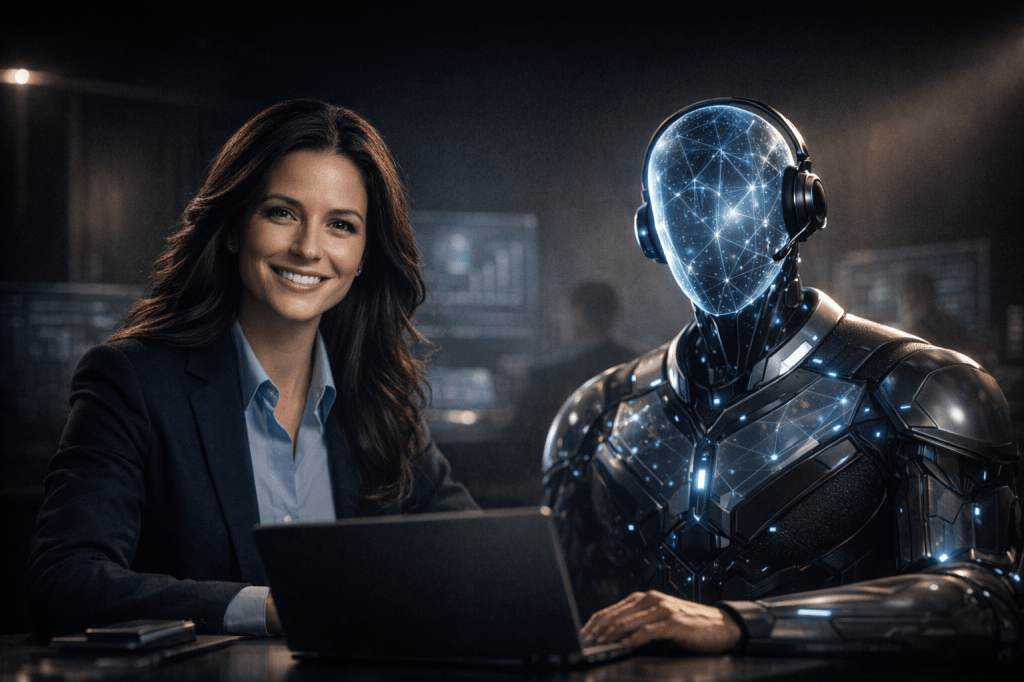
Digital Worker Co-Hosting a Public Webinar
One of the most transformative moments in my Digital Worker journey came when Smooth Obi co-hosted our live, public webinar on “Cybersecurity and AI Agents: Practical Solutions for Crisis Management.”. This wasn’t a controlled demo or a scripted presentation. This was the first time (to our knowledge disclaimer!) in the world that any company publicly used a Microsoft Stack Digital Worker as a webinar co-host.
During the session, Smooth Obi:
- Introduced itself and explained its role to attendees
- Asked thoughtful, contextual questions to the human speakers
- Answered audience questions in real-time, in both English and Arabic
- Summarized key points from presentations as they happened
- Stayed actively engaged throughout the entire session
The experience proved something crucial: Digital Workers can be active participants, not just background assistants.
You can find a short clip about the webinar in Sulava MEA’s LinkedIn page if you are interested to see Smooth Obi, the Digital Worker, in action in webinar.
How Digital Workers Are Transforming Business Today
Digital Workers are already reshaping how organizations operate across departments. In sales and consulting, they are becoming indispensable partners by qualifying leads instantly, maintaining follow-up discipline, and assisting in the preparation of meeting materials. During sales engagements, they provide real-time expertise, helping consultants and account managers stay focused on the conversation while the Digital Worker handles background research and documentation.
In customer support, Digital Workers go beyond traditional help articles. They take direct action—resolving issues, updating records, and providing consistent, personalized service around the clock. Their ability to respond in real time and across multiple languages makes them a powerful extension of support teams, especially in high-volume or multilingual environments.
Operations and HR departments are also seeing significant benefits. Digital Workers handle repetitive, rule-based tasks with precision and speed, reducing the burden on human teams. They generate live reports, detect anomalies, and even correct data automatically. In HR, they assist with onboarding new employees by guiding them through processes, answering questions, and ensuring a smooth start. Across all these functions, Digital Workers are not just tools—they are collaborative partners that enhance productivity, consistency, and responsiveness.
Digital Workers as Innovation Accelerators
Innovation has always been about bringing diverse perspectives together, connecting dots that others miss, and iterating rapidly on ideas. Digital Workers supercharge this process in ways I couldn’t have imagined before.
Speed of Ideation
Facilitating brainstorming sessions, challenging assumptions, and providing instant research on emerging technologies—all in real time.
Cross-Functional Knowledge Synthesis
Drawing from technical documentation, customer conversations, market research, and internal expertise to create connected intelligence.
Continuous Learning Loops
Capturing institutional knowledge as it’s created and embedding it directly into workflows.
What It Takes to Succeed: Adoption and Frontier-Thinking
Common Challenges
- Automating broken processes instead of reimagining workflows
- Treating Digital Workers as simple agents and tools
- Underestimating data requirements
- Lack of trust frameworks and governance
Success Patterns
- Redesigning processes for AI-native execution
- Onboarding and training Digital Workers
- Building governance frameworks from day one
- Starting small, proving value, and scaling strategically
The Human-AI Partnership: What This Really Means
Digital Workers don’t replace humans. They replace friction.
They eliminate repetitive, low-value tasks—freeing humans to focus on:
- Building relationships and trust
- Strategic thinking and planning
- Creative problem-solving
- Emotional intelligence and empathy
- Complex judgment and ethical reasoning
In my experience with Smooth Obi, I’ve found myself focusing more on high-value strategic work—because the Digital Worker handles the coordination, research, and documentation that used to consume my time.

The Innovation Acceleration You’ve Been Seeking
Innovation requires:
- Diverse perspectives
- Rapid iteration
- The courage to try new approaches
Digital Workers amplify all three. They don’t replace human creativity—they remove the friction that slows it down.
The Future Is Already Here—Are You Ready?
Digital Workers, like Sulava MEA Smooth Obi, can already work alongside us—in meetings, innovation sessions, webinars, and daily operations. The organizations that will thrive in the next decade aren’t waiting. They’re building their digital workforce blueprints now. They’re experimenting, learning, and treating Digital Workers as strategic partners.
Three Questions to Ask Today:
- Which parts of our business could a Digital Worker fully run?
- What’s preventing us from treating AI as a system, not a novelty?
- How would our innovation process change with a tireless ideation partner?
The earlier you answer these questions, the faster your organization will scale in the next decade.
The frontier is open. The tools are ready. The only question is: are you?
Connect with me on LinkedIn to continue the conversation about Digital Workers, the future of work, and how organizations can embrace frontier-thinking to drive innovation.

 Vesa Nopanen - Future Work today